Friday

Does the brainʼs wiring make us who we are?

Well, they are going to have a debate over it. The answer may determine the fate of enlightenment for the future of mankind and the question is do you, or don't you support the use of connectomics. Better yet do you, or don't you think you become who you are.

Does, or doesn't it add value to painstakingly trace the path of an existence over time if the resources required are vast?

The debate I bet will be valuable to observe since it has been more than a lifetime of coming to a point that we have enough knowledge on the mind to have one!

I look forward to witnessing the public challenge between these two formiddable proponents as they debate on an organ we thought were 10% thinking, 90% cushy comfort. .  

<<90% of the brain are glial cells, and according to a recently published interview with the author of The root of thought, neurons are important too! They are the strings that connectomics hope to tie down to map the way that our mind works, watching in awe of making sense from the wired connections they trace in our brain.>>

Listen to the experts, look at the evidence, use your common sense and say no to connectomics.

Previously disadvantaged matter

Wednesday

The pleasure of feeling good...

Or why "Tell me why I don't like Mondays" has more to do with what's going on in our head than what happens Monday morning in bed?
We humans have a complicated and ambivalent relationship to pleasure, which we spend an enormous amount of time and re­sources pursuing. A key motivator of our lives, pleasure is central to learning, for we must find things like food, water, and sex re­warding in order to survive and pass our genetic material to the next generation. Certain forms of pleasure are accorded special sta­tus. Many of our most important rituals involving prayer, music, dance, and meditation produce a kind of transcendent pleasure that has become deeply ingrained in human cultural practice.
 According to David J. Linden, professor of neuroscience at the Johns Hopkins University School of Medicine, chief editor of the Journal of Neurophysiology and Author of the book The Compass of Pleasure, for us humans (and probably for other primates and for cetaceans as well), even mere ideas can activate the pleasure circuit. Our eclecticism where pleasure is concerned serves to make our human existence wonderfully rich and complex.
Evolution has, in effect, hardwired us to catch a pleasure buzz from a wide variety of experiences from crack to cannabis, from meditation to masturbation, from Bordeaux to beef.
According to all sources, feeling good is the reason why we do just about everything, and the reason we do is the same for bonding, cuddling, orgasm, play, altruism, addiction, or every sinful pleasure we dare imagine. Oxytocin, or more precise the lack of it is on it's own the sole and only cause for most of our modern day dreary and blues.


Best known for it's role in sexual production and often referred to as the love hormone, oxytocin is a neuropeptide, and together with vasopressin the only known hormones excreted by the posterior pituary gland with an impact on distal organs and systems, but much more common in direct  response to anything that make us feel good.


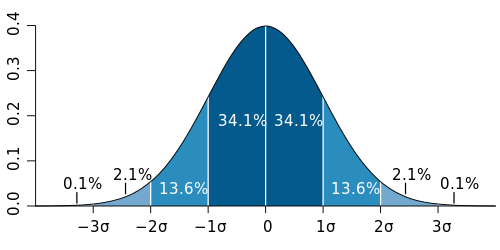
It's role in addiction is best understood in view of the genetic variations that exist between people which is believed to result in a chronic deficiency. All individuals that fall below the normal distribution of a standard bell curve would in all probability be oxytocin deficient, and therefore be prone to addictive behaviour. Behaviour that made the Boomtown Rats song famous for asking why we hate Monday's.


Because 5 day work weeks aren't nice, that's why!


Dark blue is less than one standard deviation from the mean. For the normal distribution, this accounts for about 68% of the set, while two standard deviations from the mean (medium and dark blue) account for about 95%, and three standard deviations (light, medium, and dark blue) account for about 99.7%

Saturday

Progressive Taxation and the Subjective Well-Being of Nations

In the article Progressive Taxation and the Subjective Well-Being of Nations it would seem as if there is some correlation between progressive taxation and subjective well-being.

Using data from the Gallup World Poll, we examined whether progressive taxation is associated with increased levels of subjective well-being. Consistent with Rawls’s theory of justice, our results showed that progressive taxation was positively associated with the subjective well-being of nations.

What I would like to know is who is this Rawl, and how can he be quoted so out of context that it makes me cringe?


Wednesday

RU losing your mind?


(Image via Wikipedia)
People often used to say a mind is a terrible thing to waste, and it would seem as if nature agrees in a sense. You get what you use and you lose what you don't. Just like the rest of our body, our mind works on the design principles of probability and potential in servitude to our instinct to survive and our will to thrive.

In some of the more encouraging scientific discoveries from recent years it's suggested that our mental ability could be saved from the rising incidence of senility by using it!

At first it seemed as if certain mental activities worked better than others, but as research continued we found that our brain adapt to just about anything we put our mind to, even if it means rewiring a part of the brain, as is commonly found in people learning to use cellphones for the first time.

I suppose it is easy to see how our morbid fear of getting old turned fact into the general belief that the brain is a like a muscle that can be exercised to save ourself from the permanent loss of faculty and reason, or even worse to drifting off slowly to the land forgot and in to the obscurity of Alzheimer's disease...

Easy too to understand the all too eager helping hand of those who saw a market gap, and before you could say snap had just the remedy to guarantee a mental clarity and agility you last had as a teen. It's an assumption that has spawned the multi-million-dollar computer-game industry of electronic brainteasers and memory game. But according to the research findings of a recently published paper it seems that the assumption could be wrong. According to the article in TIME:
 in the largest study of these games to date, a team of British researchers has found that healthy adults who undertake computer-based "brain training" do not improve their mental fitness in any significant way.
As you may expect, the research was immediately met with a barrage of doubt and disbelief, particularly from companies that make a lot of money with all kinds of mind enhancing schemes.

It remains to be seen who will win the battle for our sanity, but to me it seems a review of the facts on hand suffice what we have always known as true, not only of our mind, but nature all around.

Use it, or lose it


But that's just me I guess. If you have a different point of view I'd love to hear from you. 

Reblog this post [with Zemanta]

Tuesday

Babies need tummy time!

It seems that every time we interfere with the way nature intend, we discover something new that we didn't know before we tried to improve on the way things are, and most of the time we end up doing much more harm than good.

Take the recent findings on the relation between tummy time and developmental milestones as a good example (According to research, the time that babies spend playing around on their tummies is pivotal to a whole range of skills), or the discovery of below average executive functions when babies are turned on their back when they sleep.

It seemed like a good idea at the time. With crib deaths were on the rise, and statistical evidence backing up the apparent common sense that babies sleeping on their tummy are at risk, it wasn't long before Pediatric Specialists all over the world were urging mothers to turn their toddlers in the interest of preventing crib death.

And so began a growing trend of babies that are slower than tummy toddlers who have higher IQ's at 8, higher reading comprehension by the age of 26, and according to the recent finding of a long term follow-up and comparison study, by the time they hit their 30's tummy toddlers have a higher level of education and generally score better in executive functions such as categorization than babies raised on their back.

You can find the original article with links to the scientific research by following the link below:

Why babies need more tummy time than they're getting. - By Brian Mossop - Slate Magazine

Human brain - Wikipedia, the free encyclopedia


“Someday, after mastering the winds, the waves, the tides and gravity, we shall harness for God the energies of love, and then, for a second time in the history of the world, man will have discovered fire.”
Teilhard de Chardin
(French Geologist, Priest, Philosopher and Mystic, 1881-1955)

The dominant feature of the human brain is corticalization. The cerebral cortex in humans is so large that it overshadows every other part of the brain. A few subcortical structures show alterations reflecting this trend. The cerebellum, for example, has a medial zone connected mainly to subcortical motor areas, and a lateral zone connected primarily to the cortex. In humans the lateral zone takes up a much larger fraction of the cerebellum than in most other mammalian species.
Wikipedia